Skip to Content
Registrations Closed

Explore Kumiko Woodworking

Learn to make patterns of the Japanese-style latticework known as kumiko using traditional hand tools and a table saw.

Starts
Ends
Add to calendar:
Explore Kumiko Woodworking

Explore Kumiko Woodworking

Learn to make patterns of the Japanese-style latticework known as kumiko using traditional hand tools and a table saw.
Pricing
Tuition Assistance and Policies
See more
Cancellation & Other Policies
See more
Registrations Closed

About

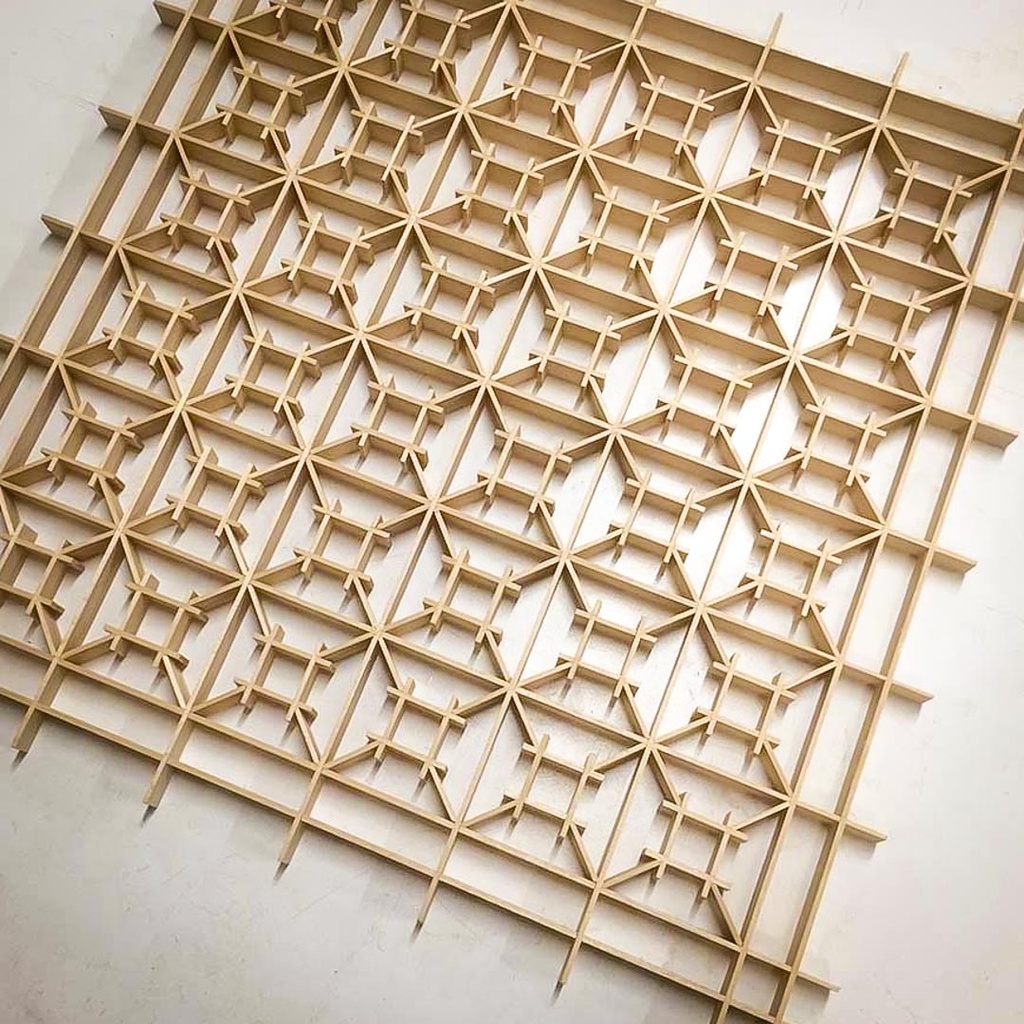
Kumiko is the Japanese technique of assembling wooden pieces without nails. In this class, you'll make several kumiko patterns, which date back to the 7th century, using a method that helps ensure satisfying results without years of training in Japanese woodworking.

This class uses jigs to help ensure accurate angle cuts, the table saw to cut the interlocking grooves, and a block plane to finish the kumiko strips prior to assembly.

Whether made the traditional way or with this hybrid approach, kumiko panels typically hold together without glue or nails because of the interlocking, precisely cut joinery. That precision also adds to the beauty of these intricate pieces.

If you want to make your own jigs to use during this class and on future projects, you might want to sign up for BARN's jig-making class here. Note that the jigs class begins a week and a half earlier.

Details

A materials fee of $75, included in the class fee, covers all materials and use of jigs. It also covers the cost of a kumiko saw that you will own so you can make additional screens.

Project

Make several basswood kumiko pieces 5 inches square and 1/2 inch thick, using a different traditional pattern for each.

Prerequisites

Class Policies

  • Ages 14 and up are welcome.

  • Wear safety glasses and closed-toe shoes, tie back long hair, and avoid dangling clothing and jewelry. We recommend bringing your own safety glasses.

Instructor
Paul Kury

Paul Kury studied woodworking at Lonnie Bird’s School of Fine Woodworking in Dandridge, Tenn., and has been an active woodworker for more than 40 years. His preference is 18th-century furniture. Paul also volunteers as a woodworking safety monitor at BARN.

Related Events

Check out other events you might be interested in!

Woodworking Tool Safety Checkout 2

Get checked out on the Woodworking Studio's major power tools not covered in Tool Safety Checkout 1.

December 21, 2026

Woodworking Open Studio

Work on projects of your own in an informal setting with a safety monitor and woodworkers of varying skill levels.

December 20, 2026

Woodworking Tool Safety Checkout 1

Learn the basic safety principles of five key tools in the woodworking shop.

December 17, 2026

-*